
With his declaration of a renewed Monroe Doctrine, President Trump is making it a top priority to secure America’s strategic interests and influence in the Western Hemisphere.
The arrest of Venezuela’s President Maduro played a key role in this new approach to U.S. national security by removing China’s influence over the Caribbean power.
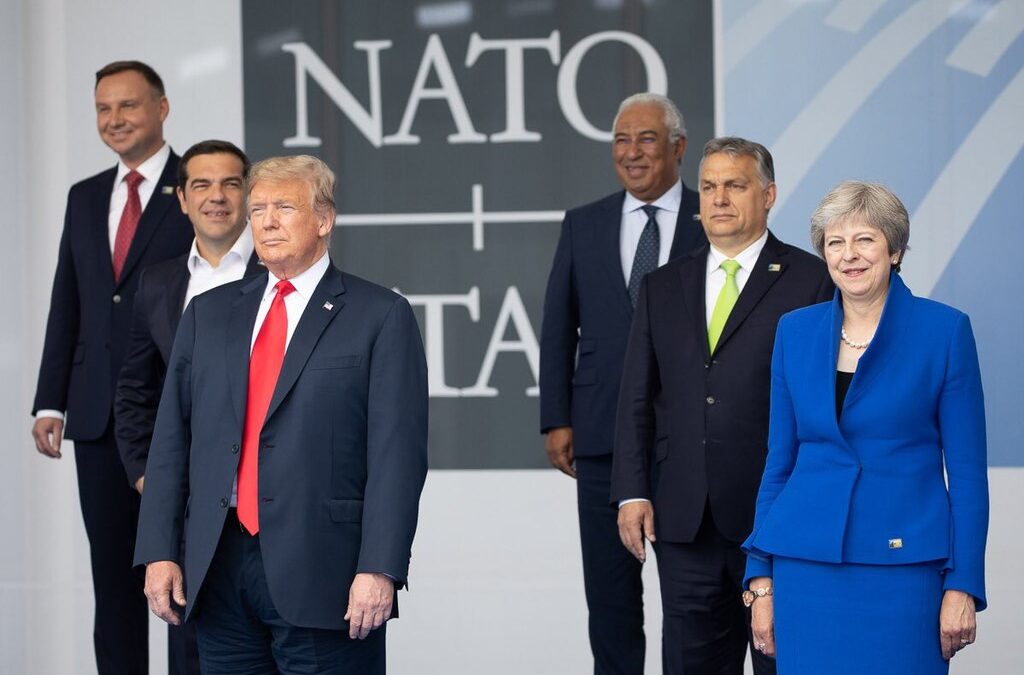
But Donald Trump just shook NATO to its Core over his commitment to crushing this new threat to the United States.
Almost as soon as Donald Trump took office for the second time, he began to speak in bold terms about restoring America’s control and influence over key strategic concerns in the Western Hemisphere.
These included retaking control over the Panama Canal – which Trump feels is falling under Chinese influence – and expanding the United States’ presence in Greenland.
Located just to the east of Canada, the sparsely populated island is rich in natural resources and is geographically positioned to be significant in an “over the pole” conflict with Russia should one arise in the future.
Greenland is owned and administered by Denmark, which makes Greenland a de facto part of NATO – the North Atlantic Treaty Organization.
With the Venezuela situation progressing smoothly, Trump has returned to the issue of Greenland, speaking in very assertive terms about making the island “part of America.”
Over the weekend, President Trump again raised the prospect of Washington asserting control over Greenland. Trump said the US needed Greenland “very badly,” reviving long-standing concerns in Copenhagen and Nuuk that his administration may be prepared to act on earlier threats.
Denmark’s prime minister has issued a stark warning that any military action by the United States against Greenland would shatter not only NATO but the entire security framework that has governed the West since the Second World War.
Greenland, the world’s largest island, governs most of its domestic affairs but remains part of the Danish kingdom. Denmark continues to oversee its defense and foreign policy.
Speaking on Danish television on Monday, Prime Minister Mette Frederiksen said the consequences of a US attack on a NATO ally would be catastrophic.
“If the United States were to launch a military attack against another NATO country, it would bring everything to a halt,” she said. “That would mean the end of NATO and the collapse of the post-war security order.”
Greenland’s geopolitical importance has grown rapidly in recent years. Located between North America and Europe, it plays a key role in US missile defense systems while its vast reserves of rare minerals are increasingly seen as critical to reducing reliance on Chinese supply chains.
Greenland’s prime minister, Jens-Frederik Nielsen, responded forcefully to Trump’s latest rhetoric, accusing the US president of crossing a line. In a sharply worded social media post, Nielsen called talk of annexation “unacceptable” and urged Trump to abandon what he described as “fantasies” about taking over the island.
Later, speaking to reporters in Nuuk, Nielsen sought to calm public anxiety, stressing that he did not believe an invasion was imminent. He rejected comparisons between Greenland and Venezuela, noting that Greenland is a democratic society with established institutions.
Frederiksen conveyed Denmark’s position directly to Trump, both publicly and privately, and pledged to defend democratic principles and international law “by every means available.”
The European Union also weighed in, with its foreign policy spokesperson reaffirming the bloc’s commitment to national sovereignty and the inviolability of borders, particularly when an EU member state is involved.
However, pressure is mounting on Frederiksen domestically, as she faces a general election later this year, to move beyond diplomacy and outline specific contingency plans should Greenland come under threat.
Trump, speaking to reporters aboard Air Force One, declined to clarify whether he planned to take action regarding Greenland, saying he would revisit the issue in “20 days.” He also questioned Denmark’s ability to defend the island, claiming Chinese and Russian vessels were increasingly active in the region.
The dispute unfolds amid rising Arctic tensions, as the US, China, and Russia compete for influence in the region.
But Trump has made it clear that securing the defense of the United States will take priority over any other concerns – even potentially the survival of NATO. In the view of the president, an unsecured and undeveloped Greenland is a threat to U.S. national security and defense.
Stay connected