
A Biden-appointed judge just handed foreign nationals a gift they never should have received.
The Trump administration isn’t taking it lying down.
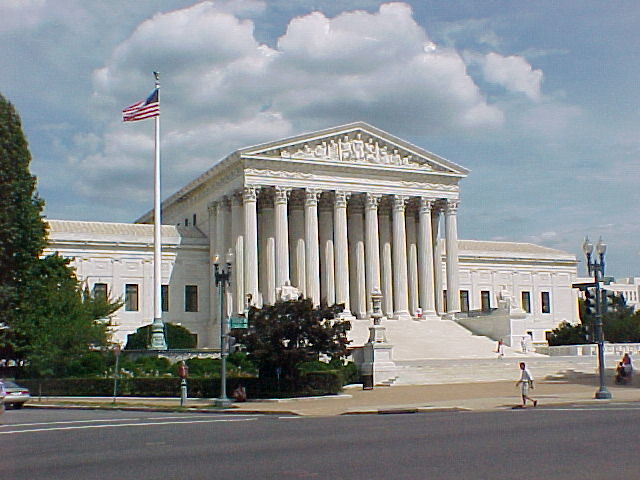
And now the Department of Justice is asking the Supreme Court to step in before November and restore a commonsense tool that keeps non-citizens off American voter rolls.
What the SAVE Program Actually Does
President Donald Trump’s Department of Justice filed an emergency application with the Supreme Court of the United States asking the justices to stay an order from Judge Sparkle Sooknanan, a Biden appointee sitting on the US District Court for the District of Columbia.
Sooknanan issued her order in June, blocking the government from using an updated version of the Systematic Alien Verification for Entitlements program — the SAVE program — to help states check whether registered voters are actually citizens.
The updates to SAVE weren’t some exotic experiment in government overreach. They streamlined the process for states to cross-reference voter rolls against federal citizenship and Social Security data, allowing states to upload voter lists in bulk for review rather than checking names one at a time.
That’s it. That’s the dangerous government program a Biden-appointed judge decided had to be stopped.
Solicitor General John Sauer wrote directly to SCOTUS calling Sooknanan’s order “indefensible” and arguing it “threatens the integrity of upcoming elections by vacating the federal government’s authority to internally use Social Security data when fulfilling its duty to respond to requests by States.”
Sauer also pushed back hard on the claim that SAVE itself harms voters. “SAVE does not disqualify any voter; instead, it merely notifies the States whether the federal government can confirm citizenship,” he wrote. In other words, the federal government flags a question. The states make the call. Any decision to remove a voter from the rolls belongs to state election officials, not Washington, DC.
Sauer went further, warning that Sooknanan’s order “will irreparably harm the federal government, the States, and the public by depriving the government of an effective tool to verify the eligibility of registered voters and benefits applicants under various state and federal programs.”
A Biden Judge Stands Between Clean Voter Rolls and November
Sooknanan, an immigrant from Trinidad and Tobago, wrote in her order that using the updated SAVE program “implicates two fundamental rights that protect Americans from government overreach: the right to privacy and the right to vote,” and declared that “the federal government has knowingly trampled on the privacy rights of American citizens in a manner that threatens the sacred right to vote.”
She also wrote that the agencies behind the SAVE overhaul had “haphazardly combined and repurposed the private information of millions of Americans, including citizenship data that they knew to be unreliable.”
That framing deserves some scrutiny.
The administration expanded SAVE by adding Social Security records and other agency data to give states a faster, more reliable way to answer a basic question: is this registered voter actually a citizen? Sooknanan decided that effort violated the Social Security Act, the Privacy Act, and the Administrative Procedure Act.
But here’s what she didn’t say: that any actual US citizen was wrongfully and permanently removed from a voter roll because of the SAVE program. The process notifies states. States investigate. States decide. A federal judge blocking that notification system isn’t protecting the right to vote — it’s protecting the ambiguity that makes voter roll integrity impossible to verify.
The Trump administration first tried to get the block lifted through the Court of Appeals for the DC Circuit. A divided panel declined, in a 2-1 ruling, to lift the injunction. That left the Supreme Court as the last stop before the November midterms.
Chief Justice John Roberts, who oversees emergency appeals from the DC Circuit, gave the parties one week to file motions.
Why This Matters Far Beyond One Court Fight
Voter fraud is a real and documented threat to election integrity, and the tools available to detect it have been systematically undercut for years by courts, advocacy groups, and politicians who treat any attempt at verification as an attack on democracy.
The SAVE program fight is the latest example of that pattern. The Trump administration built a better verification tool, tied it to an executive order directing agencies to strengthen protections against non-citizen voting, and watched a Biden-appointed judge shut it down with language about privacy and sacred rights — while remaining conspicuously silent about the sacred right of American citizens to have their votes count and not be diluted by ineligible registrations.
And the timing matters. The November midterms are weeks away. Several Republican-led states had already begun using the updated SAVE system to cross-reference their voter rolls before Sooknanan’s order landed. That work is now frozen while the litigation grinds forward.
This isn’t a new playbook. The same coalition of voting-rights groups, activist judges, and Democrat-aligned institutions that spent years blocking virtually every election integrity measure — from voter ID to signature verification to list maintenance — is running the same operation here. The names on the lawsuit change. The strategy doesn’t.
What’s different this time is that the administration didn’t quit after the district court loss. It didn’t quit after the appeals court split. It took the fight to the Supreme Court with a clear and direct argument: a single federal judge has no business stripping the government of its ability to answer a state’s question about citizenship. That’s not judicial oversight. That’s judicial obstruction of a function the federal government has a statutory duty to perform.
The millions of Americans who sent Donald Trump back to Washington, DC in 2024 did so in part because they wanted someone who would fight to make sure only citizens decide American elections. The SAVE program is that fight made concrete. Whether SCOTUS agrees to restore it before November will say something significant about whether the courts are willing to let basic election hygiene proceed or whether activist judges get to run out the clock.
The answer should be obvious. Whether it will be is another question entirely.
Sources: Breitbart, “Trump Asks SCOTUS to Permit Voter Verification System Ahead of Midterms,” September 8, 2026; The Maine Wire, “Trump Administration Asks SCOTUS to Allow Citizenship Checks on Voter Rolls Ahead of Midterms,” September 9, 2026; CBS News, “Trump administration asks Supreme Court to allow use of database to check voters’ citizenship,” September 8, 2026.
Stay connected