

The pundit class already wrote the obituary for the Republican majority in Congress.
But the pollster who saw 2016 coming looked at the same electorate and spotted something the obituary writers skipped.
And what Robert Cahaly told Sean Hannity about two blocs of voters could flip the whole November forecast on its head.
What Robert Cahaly Told Sean Hannity About November
Robert Cahaly runs the Trafalgar Group, the polling shop that made its name in 2016. RealClearPolitics credited him as the only pollster that year who correctly showed Donald Trump leading in both Michigan and Pennsylvania.
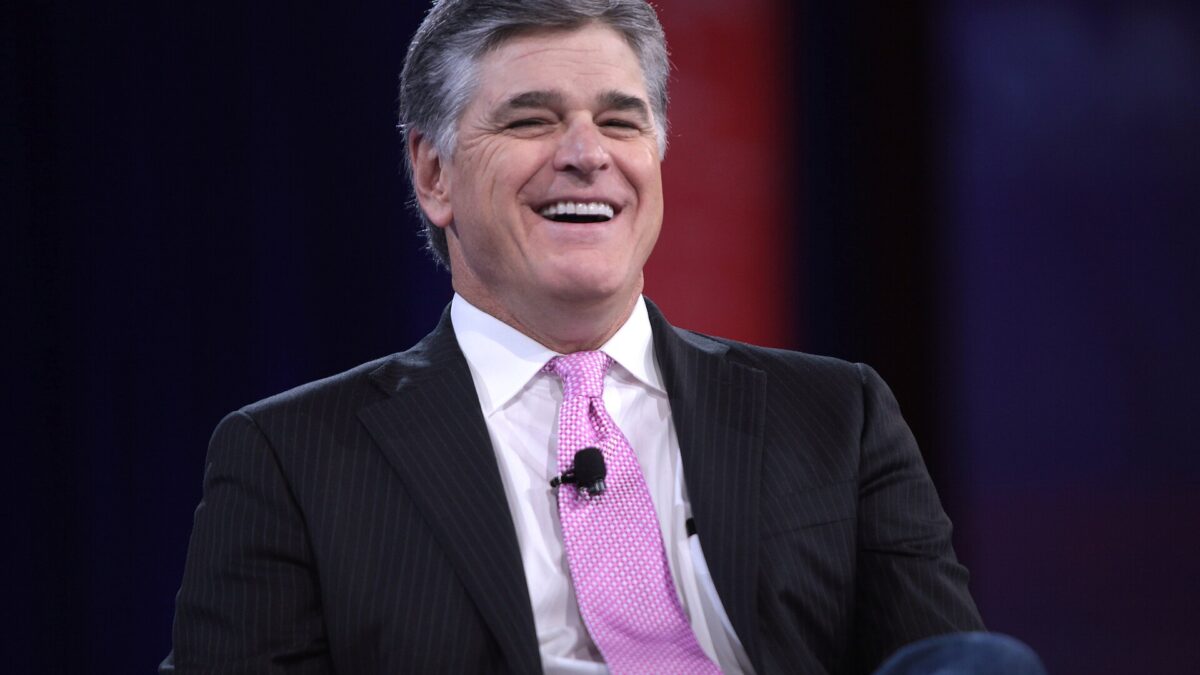
So when Cahaly sat down with Fox News host Sean Hannity in the closing stretch of the 2026 midterms, number crunchers in both parties had reason to listen.
Hannity asked whether Cahaly agreed that the polls undersold Republicans in 2024. Cahaly said he did. Then he pumped the brakes.
“When Trump is on the ballot, there is a certainly a different dynamic,” Cahaly said. “There are people who turn out just to vote for Donald Trump.”
Republicans ought to hear that as a warning. President Trump’s name appears nowhere on a 2026 ballot, and the voters who show up only for him need another reason to get off the couch.
But Cahaly kept going. He told Hannity the whole contest “does come down to turnout, which is based on enthusiasm.”
And then came the part Democrats would rather nobody repeated. Cahaly said he and Matt Towery of Insider Advantage had compared notes that same day and landed on one finding, that “the independents and young people are a little less motivated.”
His read on what follows was short. “And so I think we may see that manifest itself in a turnout that’s more beneficial to Republicans,” Cahaly said.
The Numbers Behind Two Sleepy Voting Blocs
Cahaly isn’t freelancing here. Harvard’s Institute of Politics, nobody’s idea of a conservative outfit, published its spring 2026 youth poll and found young Americans favoring Democrats on the generic congressional ballot 36% to 22%.
Only 35% of them said they would definitely vote.
Dig one layer down and the picture darkens for the Left. Harvard reported that just 25% of young independents said they would definitely vote, and only 12% of young Americans said they felt motivated and ready to participate.
An Economist/YouGov survey taken in late summer found 34% of adults aged 18 to 29 saying they would definitely cast a midterm ballot. Among Americans 65 and older, that figure hit 78%.
History says to believe the low number. CIRCLE, the Tufts University research group that tracks young voters, reports that youth turnout in midterm elections hovered around 20% for decades before it bumped up in 2018 and slid again in 2022.
Seniors vote. College kids talk about voting. Anybody who ever worked a precinct on a cold November morning knows the difference.
Why the Senate Forecasts Keep Splitting in Two
The same round of political talk shows produced two forecasts that can’t both be right. Pollster Mark Penn told Hannity he expects Republicans to keep the Senate and called the Democrat candidates in Maine and Michigan incredibly weak. David Brooks of The Atlantic went on PBS NewsHour and said the Senate looks like it’s going to Democrats.
Both men read the same polls. What separates them is a guess about who actually turns up, and that’s the exact variable Cahaly put his finger on.
Democrats built their 2026 math on anger. The theory says voters furious at President Trump will crawl over broken glass to punish his party. And among committed partisans the theory may hold, since Harvard found 55% of young Democrats saying they would definitely vote.
But no party wins a midterm on its base alone. It needs the loosely attached voters, the ones who lean its way and need a shove. Those are the independents and the under-30 crowd, and the shove isn’t landing.
Why not? Here’s a hunch, and it’s only a hunch. Democrats spent years as the party of lockdowns, open borders, and lectures, and they’ve offered young people nothing since beyond opposition to one man. Being against Trump is a mood, and moods don’t pay the rent.
Now a caution, because Cahaly himself chose the word “may.” Pollsters miss. Trafalgar’s critics point out that the firm’s 2022 midterm numbers missed the mark, and sleepy independents cut both ways, since the Trump-only voter Cahaly described is a sometime voter too.
And that’s the piece Republicans can’t shrug off. An enthusiasm edge that arrives courtesy of the other side’s apathy is a gift, and gifts don’t knock on doors or drive anybody to the polls.
Older Americans decide midterms. They always have. That 78% figure among seniors says plenty about who picks the next Congress, and that crowd remembers what the Biden years did to a grocery bill.
But the press will keep printing obituaries for the Republican majority anyway. Cahaly’s finding suggests the writers skipped a step and never checked whether the mourners plan to attend the funeral.
Democrats need two groups to care. Two veteran pollsters say those groups are yawning. November will show whether a yawn counts as a vote.
Sources:
RealClearPolitics, “Cahaly: Lower Enthusiasm Among Independents And Young People Could Benefit Republicans”
RealClearPolitics, “Pollster Who Got It Right in 2016 Does It Again”
Harvard Institute of Politics, Harvard Youth Poll, 52nd Edition, Spring 2026
Carolina Political Review, “Extremely Likely to Vote, Historically Less So”
Yahoo News, “Trump’s approval rating quietly shifts with youngest voters”
Stay connected