
Washington voters have rejected a state income tax for nearly a century.
Then Olympia Democrats passed one anyway, and more than half a million residents signed petitions to kill it.
But the newest celebrity to jump into the brawl gave an answer no game show judge would accept.
The Jeopardy! Champ Picks a Side in Olympia’s Tax War
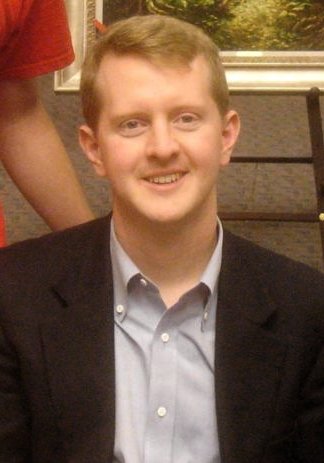
Ken Jennings won 74 straight games on Jeopardy! back in 2004 and later took over the host’s podium. Now he wants a different kind of win in his home state.
Jennings threw his support behind the NO on 645 coalition, the campaign fighting to save Washington’s new 9.9% tax on individual income above $1 million a year.
Travel guru Rick Steves signed on with the same coalition.
Some background helps here. Democrats in the State Legislature passed the tax as Senate Bill 6346 in 2026, and Governor Bob Ferguson (D) signed it into law in March of that year. The levy targets roughly 25,000 of the state’s highest earners, and the state won’t collect a single dollar from it until 2029.
But plenty of Washingtonians didn’t wait around for the bill to come due. Brian Heywood and his group, Let’s Go Washington, gathered more than 500,000 signatures for Initiative 645, which would repeal the tax and bar any tax on individual income at the state and local level. The Secretary of State certified the measure for the November 2026 ballot.
That’s where Jennings comes in.
In a 30-second ad, he rattles off a string of questions the way he’d read clues on a Tuesday night broadcast. Okay, any night.
“Did you know Initiative 645 would give millionaires and billionaires a thirteen billion dollar tax break, making Washington’s unfair tax system, where working families pay two times more than the wealthiest, even worse?” Jennings asks.
He keeps going. “Or that 645 would mean huge cuts to public schools?” Jennings says. “Or that teachers, nurses and small businesses all oppose 645? It doesn’t take a quiz show host to know that 645 is wrong for Washington.”
“Vote NO,” he concludes.
Why the No Campaign Needs Snohomish County
The casting choice wasn’t random. Jennings lives in Seattle, and NW Progressive, a left-leaning outlet cheering on the No side, pointed out that he was born in Snohomish County, the area the blog calls Washington’s bellwether swing county.
“Snohomish voters will play a crucial role in deciding whether Heywood’s 645 is defeated or not,” NW Progressive wrote.
The blog expects King County, home to Seattle, to vote the repeal down. But Snohomish is the real prize. It holds the third largest bloc of voters in the state, and it usually backs Democrats for statewide and federal office while sometimes siding with Republicans and right-leaning ballot measures closer to home.
So the tax’s defenders need a familiar, friendly face to convince suburban and working-class voters north of Seattle that a tax on millionaires is somehow their fight.
And who’s friendlier than the guy who reads trivia clues to millions of retirees every weeknight?
The Answer Jennings Left Off the Board
Start with the phrase “tax break.” Repealing a tax that hasn’t collected a cent doesn’t hand anybody a gift. It leaves money with the people who earned it, and a government can’t give away what it never had in the first place.
And every dollar Olympia pulls out of the private economy is a dollar no longer building a business, hiring a welder, or keeping a family farm afloat. Government doesn’t create wealth. It moves it around and takes a cut for the trouble.
Then there’s the line about working families paying two times more than the wealthy. Washington’s working families do carry a heavy load, mostly through sales and property taxes. But the No campaign’s own allies have griped that I-645 would leave the deal’s tax cuts for middle- and lower-income residents in place. Odd complaint for folks who claim to be fighting for the little guy.
But the scariest part of this whole fight isn’t about millionaires at all.
Heywood has warned that voters can’t trust state leaders to keep this tax confined to high earners. Ferguson swears he’d veto any bill lowering the $1 million threshold. Governors come and go, though. Tax laws have a way of sticking around long after the promises fade.
Americans have seen this movie before. The federal income tax arrived in 1913 as a small levy that touched only a sliver of the wealthiest households. Within a few decades, Washington, DC, was reaching into nearly every paycheck in the country.
And Olympia is already running the same play. The Legislature passed a capital gains tax on the wealthy in 2021. In 2024, 62% of voters rejected a Heywood initiative to repeal it. Two years later, the same Legislature came back for income itself.
Anybody who thinks the line stays parked at $1 million forever should ask what comes next. A $500,000 threshold? A “temporary” surcharge during the next budget crunch? Nobody in Olympia is saying, which is sort of the point.
Follow the Union Money Behind the Schools Pitch
The warning about cuts to schools deserves a closer look too. The tax doesn’t start collecting until 2029, so no government school in Washington depends on one penny of it right now. Repealing it cuts nothing that currently exists.
The loudest voices on the No side also have a direct stake in the outcome. The Service Employees International Union handed the campaign $1 million, and other public sector unions poured in roughly $200,000 early on. Washington Education Association President Larry Delaney has blasted the initiative as a threat to school funding and household costs.
Even the ballot itself leans on the scare. Let’s Go Washington went to court over the 21-word impact statement printed under the ballot title, which tells voters repeal would decrease funding for schools, healthcare, and other services. Polling shows that kind of language drags down support for tax-cutting measures, which explains why the tax’s defenders wanted it there.
A GBAO survey the opponents promoted showed 57% against the initiative and 38% in favor. Voters in the survey heard that same impact statement before answering. Draw your own conclusions.
Former Attorney General Rob McKenna has also filed a lawsuit questioning whether the tax squares with the state constitution at all.
And then there’s the celebrity angle. Jennings banked millions in game show winnings, and Steves built a travel empire on public television. Neither man needs Olympia’s help, yet both filmed commercials telling ordinary voters in Everett and Lynnwood to protect a new tax.
But maybe that tells voters everything. Washingtonians have said no to a state income tax over and over since the 1930s, and in November 2026 they get another shot at it. Unlike the contestants on Jennings’ stage, they won’t need to phrase their answer in the form of a question.
Sources:
Breitbart News, “Watch: ‘Jeopardy!’ Host Ken Jennings Backs ‘Millionaire’s Tax’ in Washington”
KIRO 7, “Initiative to repeal WA ‘Millionaires Tax’ qualifies for November ballot”
Fox 13 Seattle, “Opponents file 511K signatures to repeal WA millionaire tax”
CPA Practice Advisor, “Campaign to Repeal Washington ‘Millionaires Tax’ Submits Over 500,000 Signatures”
CPA Practice Advisor, “Washington ‘Millionaires Tax’ Repeal Faces Legal Fight Over 21 Words”
Washington State PTA, “Initiative IP26-645”
Ground News, “‘Millionaires tax’ repeal qualifies for ballot in Washington state”
Stay connected