
President Trump rallied the country in a celebration of the United States’ 250th Anniversary during his first official State of the Union Address of his second term.
But the president did not shy away from calling out Democrats on numerous points.
And Rep. Ilhan Omar completely lost all control when Trump used just one word!
Democrats demonstrated a fragmented but unmistakable show of resistance during President Donald Trump’s State of the Union address, transforming what is typically a choreographed ceremony into a series of confrontations that highlighted the widening gulf between the parties.
From silent protests to shouted accusations, the evening became a live display of political tension rarely seen at such a formal event.
One of the first disruptions occurred moments after the president began speaking, when Representative Al Green positioned himself in the center aisle holding a sign that read, “Black people aren’t apes.”
The message referenced a video previously shared by Trump that some on the left have deemed “racially offensive.”
As lawmakers settled into their seats, Green remained standing, keeping the sign visible to cameras until House Speaker Mike Johnson ordered his removal.
It marked the second consecutive year Green had been expelled from the chamber during the annual address.
Republicans reacted angrily as Green was escorted out. Some attempted to obstruct the sign from view, while others confronted him verbally.
Chants of “USA” echoed through parts of the chamber as Green exited, leaving behind an empty desk marked only by a handwritten name card.
Outside the chamber, Green later said the incident was insignificant compared to the moral obligation he felt to speak out.
Other Democrats alternated between visual demonstrations and bouts of shouting.
Representative Norma Torres raised a sign bearing photographs of Alex Pretti and Renee Good, both killed in incidents involving federal immigration authorities.
Their deaths have become central symbols for Democrats criticizing Immigration and Customs Enforcement and demanding accountability.
As the address continued, the divide in the chamber grew sharper.
Republicans rose repeatedly in applause, while Democrats largely stayed seated, shouted objections, or exited early.
Senator Mark Warner later said he left because he could not sit through what he described as a cascade of falsehoods, while Representative Bill Foster said he departed after counting what he considered multiple lies.
The confrontations intensified as Trump turned to immigration and fraud, singling out Minnesota while accusing members of the Somali immigrant community of orchestrating massive abuses of taxpayer-funded programs.
The president framed the issue as evidence of broader cultural failures tied to immigration policy, language that immediately drew vocal backlash from Democratic lawmakers.
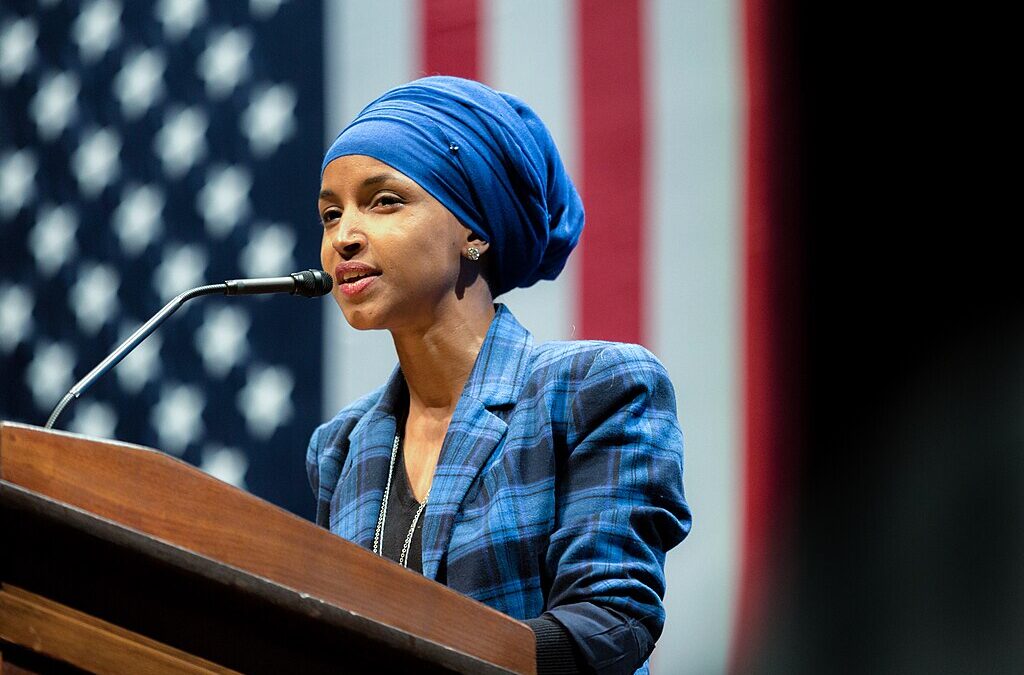
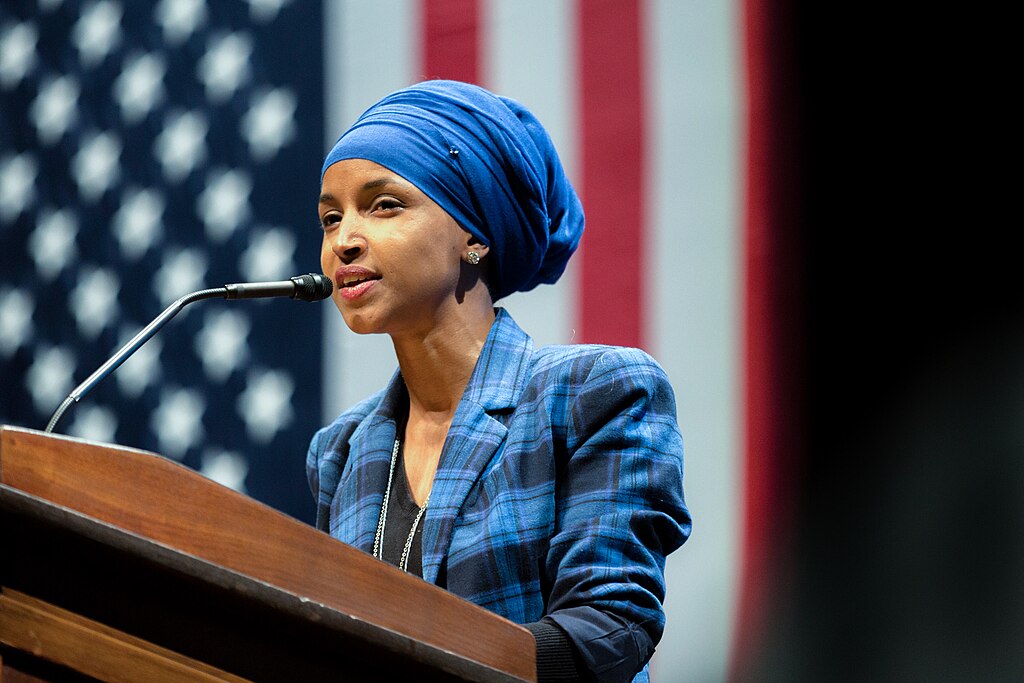
Representative Ilhan Omar completely lost control and began yelling from her seat, shouting accusations that Trump was lying and holding his administration responsible for American deaths.
Beside her, Representative Rashida Tlaib joined in, echoing similar claims as Republicans stood to applaud the president’s remarks.
Another flashpoint followed when video clips surfaced online showing Tlaib chanting “KKK” during moments when Republicans were chanting “USA.”
The footage spread rapidly, prompting outrage from conservative groups, including the National Republican Congressional Committee, which accused Democrats of showing contempt for the nation and called for disciplinary action.
President Trump responded the following day on social media with harsh personal attacks against Omar and Tlaib, escalating the dispute further.
His remarks fueled additional backlash and extended the controversy well beyond the House chamber.
Omar later defended her actions in interviews, saying she deliberately ignored guidance from Democratic leadership to remain silent or skip the speech.
She argued that when Trump spoke about protecting Americans, she felt compelled to challenge what she viewed as a distortion that ignored the deaths of her constituents.
Silence, she said, would have amounted to erasing their experiences.
By the end of the night, the State of the Union had evolved into more than a policy address.
It became a battleground over immigration, race, protest, and political expression — underscoring how even the most ceremonial moments in Washington have become arenas for open conflict, with neither side willing to yield ground.
West Wing Daily will keep you up to date on any new developments in this ongoing story and the rest of the breaking news in politics. Please bookmark our site, make us your homepage, and forward our content to your friends on social media and by email.
Stay connected