
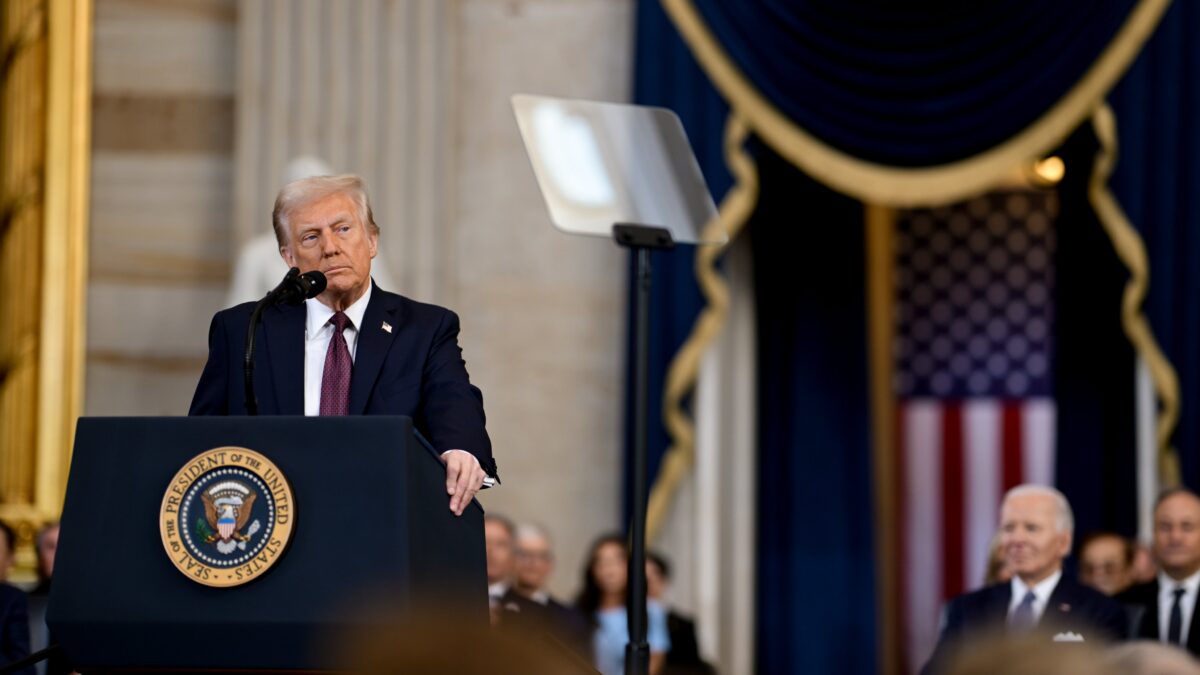
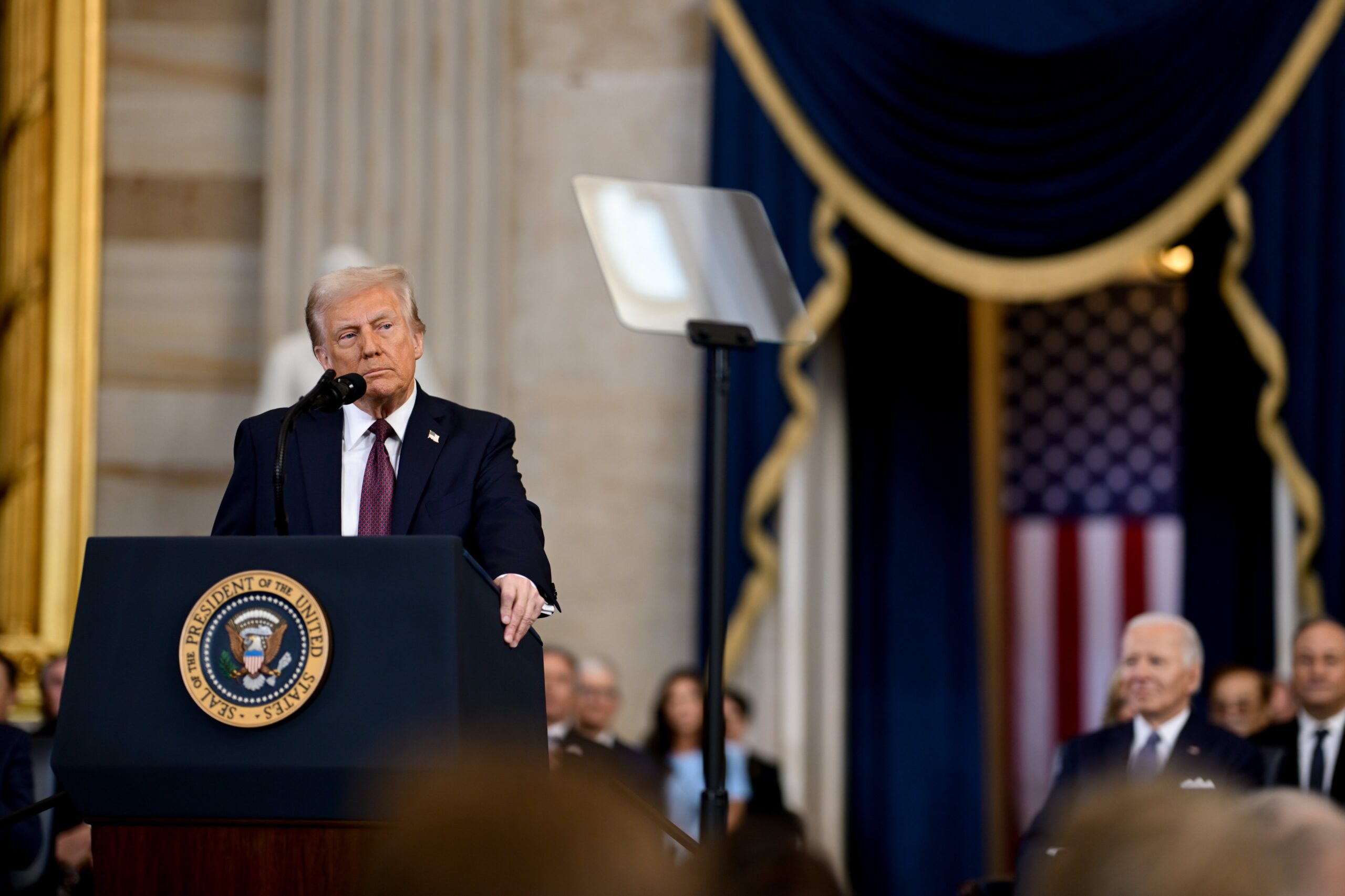
President Trump is making his position crystal clear.
He is done with excuses, stalling, or back-stabbing.
Donald Trump has sworn to clean house after this latest betrayal goes too far.
Senate Republicans have escalated their push for stricter voting requirements into a prolonged confrontation on the chamber floor, using the debate less as a pathway to passage and more as a way to sharpen political contrasts over election policy.
At the center of the dispute is the Safeguarding American Voter Eligibility (SAVE) Act, a proposal strongly backed by former President Donald Trump that would require proof of U.S. citizenship to register for federal elections.
Although GOP leaders recognize the bill faces steep procedural barriers, they are moving forward with an extended debate to draw attention to Democratic opposition.
Republicans view the issue as a defining one, arguing it underscores broader concerns about election integrity.
By forcing a drawn-out legislative fight, they aim to highlight differences between the parties ahead of upcoming campaigns.
Democrats, however, have taken a firm stance against the measure.
Senate Minority Leader Chuck Schumer and his colleagues have characterized the proposal as overly restrictive, warning it could make it harder for eligible Americans to participate in elections.
They have signaled their readiness to use Senate rules to delay or block the bill, setting the stage for a lengthy standoff.
The internal dynamics within the Republican Party have added another layer of complexity.
Senate Majority Leader John Thune has been under steady pressure from Trump and conservative allies to bring the legislation forward and pursue aggressive tactics to advance it.
While Thune has agreed to move ahead with the debate, he has also acknowledged the limitations imposed by the Senate’s procedural framework and the lack of Democratic support.
Disagreements among Republicans have surfaced over how far to go in challenging those constraints.
Some lawmakers have floated unconventional strategies, such as requiring continuous floor speeches to sustain a blockade against the opposition, in hopes of eventually easing the vote threshold needed for passage.
Others remain cautious, concerned that such moves could open the door for Democrats to reshape the bill in ways that would undermine its original intent.
Even the initial steps to begin consideration of the legislation revealed fractures within the GOP.
Not all Republican senators aligned on key procedural votes, highlighting the difficulty of maintaining cohesion on a proposal that carries both policy and political implications.
As the debate unfolds, the amendment process presents another significant obstacle.
Any changes to the bill must clear a supermajority requirement, making it highly unlikely that additional provisions favored by Republican leaders will be adopted.
Among the ideas under discussion are new limits on certain forms of mail-in voting, along with other policy proposals that extend beyond election administration into broader social issues.
These additions have prompted debate within the party, particularly regarding how far reforms should go.
Outside Washington, Republican governors and attorneys general have stepped in to reinforce the push for the legislation.
In coordinated statements, they argue that current voter registration systems depend too heavily on applicants simply affirming their eligibility, without consistent mechanisms to verify citizenship.
They contend that strengthening documentation requirements would close gaps in the system and bolster confidence in election outcomes.
These state officials also point to what they see as wider implications, suggesting that inaccuracies in voter eligibility could influence representation and the allocation of federal resources.
At the same time, they emphasize that any reforms should be implemented carefully to avoid placing unnecessary burdens on eligible voters.
Supporters of the SAVE Act maintain that requiring proof of citizenship is a reasonable safeguard and reject claims that such measures would unfairly impact certain groups.
Critics, meanwhile, argue that additional requirements could create barriers, particularly for individuals who may face challenges obtaining documentation.
With the Senate closely divided, the bill’s prospects remain uncertain at best.
Yet the ongoing clash illustrates how election policy continues to serve as a central dividing line in national politics.
Even without a clear path to enactment, the debate itself has become a vehicle for both parties to define their positions—and to make their case to voters.
President Trump has made it clear that this is a “do-or-die” issue for him.
Posting on Truth Social, Trump wrote: “The Save America Act is one of the most IMPORTANT & CONSEQUENTIAL pieces of legislation in the history of Congress, and America itself…I WILL NEVER (EVER!) ENDORSE ANYONE WHO VOTES AGAINST ‘SAVE AMERICA!!!’”
Any Republican who breaks ranks over the SAVE Act is sure to face fierce reprisals by Trump and his MAGA supporters.
West Wing Daily will keep you up to date on any new developments in this ongoing story and the rest of the breaking news in politics. Please bookmark our site, make it your homepage, and share our content with your friends on social media and by email.
Stay connected