

California’s left-wing tax machine just picked a fight with someone who actually knows how startups work.
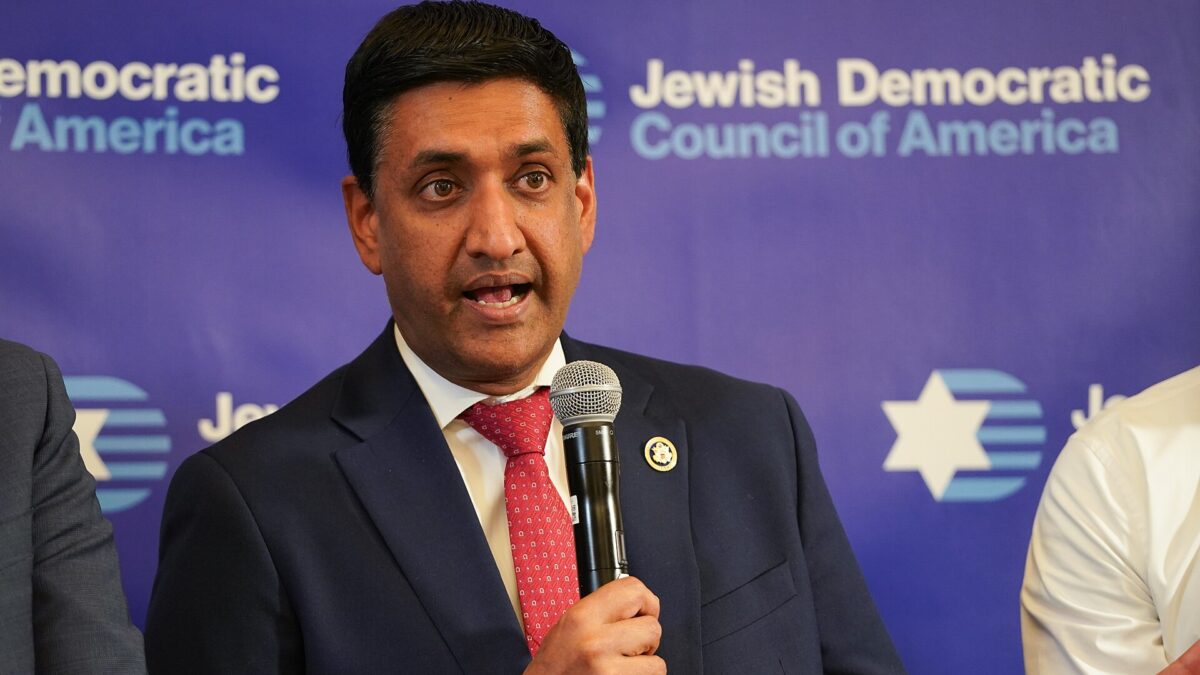
Rep. Ro Khanna went public with his push for a 5% wealth tax on California billionaires, and Mark Cuban went after him for it.
And Cuban’s parting shot landed hard: “Ideology is not a strategy, Ro.”
What Khanna Is Pushing and Why Cuban Isn’t Buying It
The fight centers on California’s Proposition 40, a ballot measure that would impose a one-time 5% wealth tax on state residents with more than $1 billion in assets. The California Democrat Party endorsed it. Sen. Bernie Sanders (I-VT) got behind it too.
Khanna posted a video on X making the case that the tax would protect healthcare for working-class Californians. “The California Democratic Party and the California labor movement just stood with @BernieSanders and me in supporting 5% wealth tax on 250 California billionaires,” he wrote. He added that “California voters want a Democratic Party that will stand up for the working class over the billionaire class.”
That’s the pitch. Sounds simple enough. But Cuban didn’t let it sit.
He fired back with a basic business reality that Sacramento politicians apparently haven’t thought through. Founders of high-growth startups, the kind California has spent decades bragging about, often become billionaires on paper long before they ever see that money in cash. “They are the definition of cash poor, stock rich,” Cuban wrote on X.
These are the Deca Unicorns, the $10 billion startups that Cuban pointed out are growing in California by the day. Even when a company raises a billion dollars in venture capital, the founders themselves typically don’t pocket that money. It goes into the company. So when Sacramento comes knocking for 5% of a founder’s net worth, the founder may not have the liquidity to write that check.
Khanna’s answer was to propose that illiquid founders take out a non-recourse loan, pledging their shares as collateral to pay the tax. The government would hold those shares for roughly ten years, then get repaid in cash or take possession of the stock if the company failed.
Cuban wasn’t impressed. He pointed out that the arrangement would have California lend money that immediately flows right back to California as a tax payment, generating zero new cash revenue from those founders at the moment of collection. And then he laid out the real problem: a founder could spend a decade grinding, creating thousands of jobs, paying hundreds of millions in taxes to the state and federal government over those years, and still never have $250 million in cash to pull out of the company because the company is growing. “You don’t understand business Ro,” Cuban wrote. “It doesn’t have to fail. Those entrepreneurs can bust their asses for the next 10 yrs. Create THOUSANDS OF JOBS, pay more than 250m taxes to the Feds and state over those 10 yrs. BUT, never have 250m they can take out of the company.”
That’s the part the tax-the-rich crowd doesn’t want to explain. The government would be forcing a founder to hand over shares in a growing company or take on debt they can’t service, not because the company is failing, but because it’s succeeding.
Cuban’s Investment Ultimatum
Cuban made clear he’d put his money where his mouth is. “If this passes, only idiot startup founders stay in Cali,” he wrote. He went further: “I will make NOT being in California a prerequisite for an investment.” Dallas. Pittsburgh. Indiana. He’s moved companies out of California before and said he’d do it again.
That’s not a theoretical warning. Cuban has a track record of backing startups and demanding they operate in business-friendly environments. The message to every ambitious founder sitting in a San Jose garage right now is pretty clear: if Proposition 40 passes, the investors who can write the checks that turn startups into Deca Unicorns will be asking one question before they sign anything. Are you willing to leave?
And a lot of them will leave. That’s not speculation. California has been hemorrhaging wealthy residents for years, according to IRS data tracking taxpayer outflows from the state. The billionaire tax debate is accelerating conversations that were already happening.
Khanna pushed back in a way that probably didn’t help his case. He told Cuban to come on a road trip with him to ask ordinary Americans how they feel about a billionaire tax. “Most say, I promise you, why only 5 percent?” Khanna wrote. He also noted that 85% of the nation’s venture capital money came into California in the first quarter of 2026, as if that number proves the tax is harmless. Cuban’s point, of course, is that it won’t stay that way.
What Sacramento’s Tax Logic Actually Costs
Every dollar taken in taxes is a dollar no longer working in the private economy. That’s not a slogan, it’s arithmetic. And when the tax falls on paper wealth that can’t easily be liquidated, the government isn’t just taking money, it’s disrupting the very structure of how successful companies grow.
The California Democrat Party endorsed this measure. Gov. Gavin Newsom, to his credit, came out against it, though he has expressed support for a federal wealth-tax approach instead. That’s a meaningful split within the party, but it doesn’t change what Khanna is doing. He represents a significant chunk of Silicon Valley, and he’s out there campaigning for a tax that his own constituents say will drive them out of the state.
This isn’t the first time Sacramento has treated its most productive residents as a resource to be extracted rather than an engine to be protected. California already has the highest income tax rate in the country. The state has watched residents and businesses leave for Texas, Nevada, and Florida for years. And the political class keeps reaching for the same lever.
But taxing unrealized gains on illiquid assets is a genuinely new kind of overreach. It’s not taxing income. It’s not taxing a transaction. It’s taxing the value of something a founder hasn’t sold and may not be able to sell without destroying the company in the process. That’s a philosophical shift in what taxation means, and it’s the kind of policy that, once established, never stays confined to billionaires.
Khanna framed this as standing up for the working class over the billionaire class as part of his expected 2028 Presidential campaign. Cuban’s response cuts to the core of why that framing is a trap. The founders who get hit by this tax are the people creating the jobs, building the companies, and generating the tax revenue that funds everything California spends money on. Drive them out, and the working class doesn’t get more, it gets less. The tax base shrinks. The programs that Khanna says he’s protecting lose their funding source.
Governments do not create wealth. They redistribute it. And every scheme that treats paper gains as a piggy bank to raid is betting that the people being raided won’t simply move to a state that treats them better.
Cuban’s message was direct. Khanna’s pitch is ideology dressed up as economic policy. And ideology, as Cuban put it, is not a strategy.
Sources: New York Post; Fox Business; Benzinga; X posts from @mcuban and @RoKhanna
Stay connected