
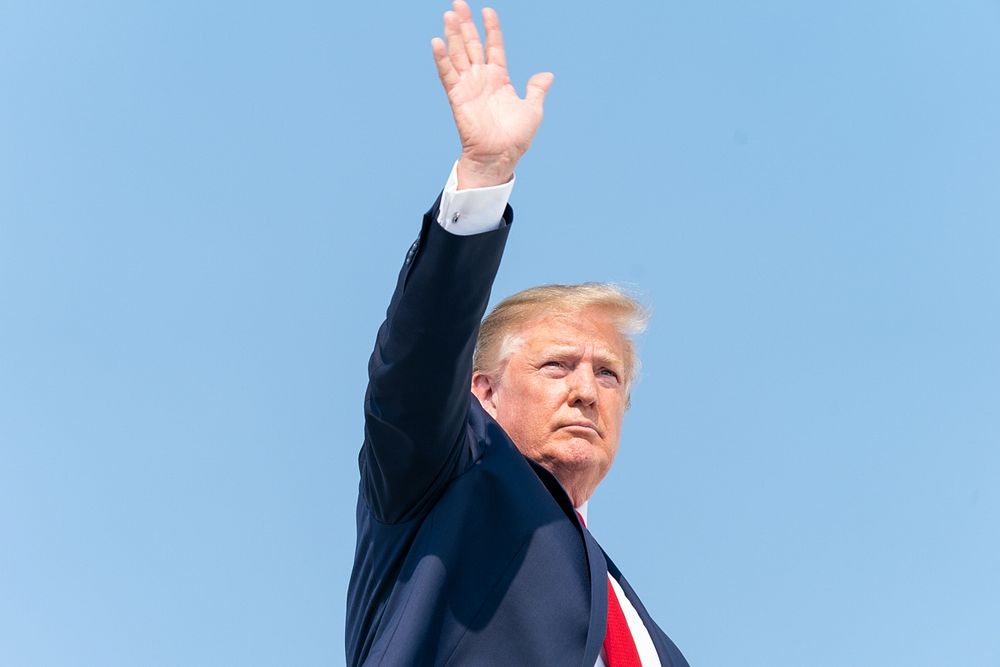
The Biden years left a lot of Americans holding the bag on healthcare costs.
Now the Treasury Department is cutting real checks to nearly a million people who got overcharged.
And what Trump said in the letter going out with every one of those checks is exactly what working families needed to hear.
The Biden Overcharge Nobody Talked About
The Trump administration started mailing $500 refund checks to more than 950,000 Americans across 30 states who bought health insurance through HealthCare.gov under the Obamacare system. Each check comes with a signed letter from President Donald Trump, and that letter pulls no punches.
“For years, the Biden administration overcharged you to fund the operation of HealthCare.gov,” Trump wrote in the letter, according to USA Today. “That money belongs to hard-working Americans, not the Government, and now I’m returning it to you!”
The White House says the Biden administration collected so-called user fees from insurance companies selling plans on the federal exchange, fees that got passed directly to consumers through higher premiums. According to the administration, the Biden operation accumulated a surplus of approximately $500 million in those fees beyond what was actually needed to run the exchange. That surplus sat there, untouched, while working families paid more every month for their coverage.
“Our administration is doing the right thing and giving the money back to the people who were wrongly ripped off,” Trump added.
Families with more than one eligible member can receive multiple $500 payments. The White House fact sheet frames the program plainly: “The Biden Administration overcharged Americans through Obamacare plan exchange ‘user fees’ that were passed on to consumers in the form of higher premiums, funding the operations of the federal Obamacare exchange far in excess of what was needed to run the exchange.”
Who Gets the Money and Where the Checks Are Going
The refunds go to Americans who paid full price for coverage through the federal exchange without receiving any premium assistance under the Affordable Care Act. That means the people who earned too much to qualify for subsidies but still bought insurance through HealthCare.gov are the primary beneficiaries.
Most recipients earn around 400 percent of the federal poverty level, roughly $64,000 a year for a single person or about $132,000 for a family of four, though some recipients fall between 100 and 400 percent of that threshold. The 20 states that run their own separate exchanges are not included because the federal government did not collect user fees from those marketplaces.
Texas and Florida lead the count. The administration estimates 139,000 eligible Texans and 127,900 eligible Floridians will receive refunds.
The full list of qualifying states includes Alabama, Alaska, Arizona, Arkansas, Delaware, Florida, Hawaii, Indiana, Iowa, Kansas, Louisiana, Michigan, Mississippi, Missouri, Montana, Nebraska, New Hampshire, North Carolina, North Dakota, Ohio, Oklahoma, Oregon, South Carolina, South Dakota, Tennessee, Texas, Utah, West Virginia, Wisconsin, and Wyoming.
Trump originally announced the program on September 10 in a video the White House posted during the Republican midterm convention in Dallas. “The relief begins with refunding everyone who was overcharged,” he said at the time.
And these $500 checks are entirely separate from the $5,000 checks Trump vowed to give every American adult if Republicans hold the House and Senate after the November midterms. Two different programs, two different pots of money.
The Bigger Picture on Government-Run Healthcare Costs
The Obamacare system was always structured to expand government control over the healthcare market, and the user fee mechanism is a perfect illustration of how that works in practice. Insurance companies pay fees to operate on the federal marketplace. Those fees get baked into premiums. Consumers pay more. And somewhere along the way, a $500 million surplus accumulates inside the federal bureaucracy without anyone sending a dime back to the people who created it.
That is how government-run healthcare actually operates. Not with efficiency, not with transparency, but with a quiet accumulation of excess revenue from people who had no real choice about whether to participate in the system.
Trump also endorsed the Republicans’ healthcare legislation, which he referred to as The Great Healthcare Plan, saying it will lower drug prices, reduce insurance premiums, and force industry transparency. “We will get insurance companies to disclose their profits and how many claims they deny so we know the good ones from the bad,” Trump said.
The checks arrive just over a month before the November midterm elections, with healthcare affordability ranking as a top concern among voters.
That timing matters because the broader story of healthcare costs under the government-managed Obamacare system has not been flattering for the people who built it.
When the enhanced premium subsidies that kept coverage cheaper expired at the end of 2025, millions of Americans saw their premiums spike. Some dropped coverage entirely. Others downgraded to plans covering less.
The Obamacare exchange, sold to the American people as a solution to affordability, produced the opposite result for a large segment of the population as soon as the temporary subsidy cushion disappeared.
None of that happened by accident. It happened because the system places the federal government at the center of healthcare transactions, creating the conditions for exactly the kind of fee accumulation and cost transfer the Trump administration is now unwinding.
“With this Historic Action, my Administration is taking the surplus funds that accumulated from the Obamacare Premium Tax and issuing a one-time $500 REFUND to Americans who use the HealthCare.gov platform to purchase their health insurance, but who do not receive Taxpayer Subsidies to pay for their Coverage,” Trump wrote in the letter accompanying the checks.
The word “historic” is one the White House uses deliberately here. Returning money that a federal program accumulated at the expense of working families is not the normal behavior of a government that views Obamacare as a success. The normal behavior is to keep the surplus, grow the program, and tell the public the system is working.
Trump’s approach flips that entirely. The government collected too much, the government gives it back. That principle sounds simple because it is simple. But it runs directly against the operating logic of government-managed healthcare, which has never historically moved in the direction of returning money to the people who paid it.
Nearly 19.2 million Americans currently hold coverage through the Affordable Care Act marketplace, according to figures published by the Department of Health and Human Services. The 950,000-plus receiving these checks represent a fraction of that total. But the principle behind the refund program reaches further than the check amount. If the federal government overcharged its way to a half-billion-dollar surplus on one fee category alone, the question worth asking is what else accumulated inside a system that operated for years with virtually no external accountability.
That question does not get answered by the Obamacare defenders. It gets answered by presidents willing to look inside the machine and return what does not belong to the government in the first place.
“You have paid into this flawed System, and now you are finally getting something back,” Trump wrote.
Hard to argue with that.
Sources: Daily Caller; USA Today; The Hill; White House Fact Sheet; CNBC; NewsNation
Stay connected