

Pete Hegseth is fighting for his job while Democrats salivate over impeachment and Washington whispers about his replacement.
The President insists his Pentagon chief is doing a very good job.
And Steve Bannon just reached back 164 years for one comparison the Pentagon won’t enjoy.
Bannon Wants Answers Before Anybody Reloads
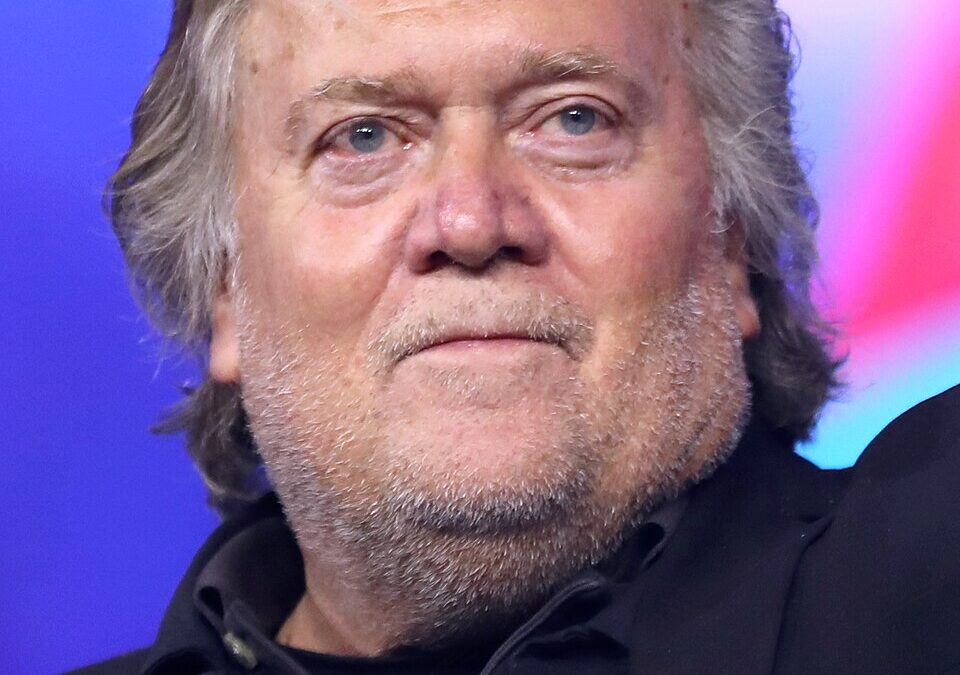
Steve Bannon used a recent episode of his WarRoom show to do something the Washington war crowd has dodged for months. He asked who should answer for the war with Iran.
“Who’s accountable for that?” Bannon asked his guest, Mark Lucas, the president of Veteran Action.
He didn’t sugarcoat where things stand, either. “We went into a regime change war,” Bannon said. “And here we are a long way from victory.”
That’s a heavy charge from a man who spent years in Donald Trump’s corner. But Bannon didn’t aim it at Trump’s voters, and he didn’t aim most of it at Defense Secretary Pete Hegseth. He aimed it at the paperwork.
“Pete’s got to go back to look at the briefings from the Pentagon,” Bannon said. “They’re not exactly on point.”
Then he widened the lens. “We just had a catastrophic defeat militarily that goes back to the war, decisions around the war: who made the decisions, where the information came from, what did the Israelis have to say,” Bannon said, before calling for a presidential commission to put all of it on the table.
Lucas jumped to Hegseth’s defense. He reminded viewers what the Biden-era Pentagon looked like before Hegseth arrived, when brass chased good officers and enlisted troops out of uniform over COVID shots.
“They tried to force an unlawful COVID-19 vaccine on me that I had to reject,” Lucas said. “Our military was woke, and it was lost.”
Bannon agreed with that much. He credited Hegseth with lifting recruitment and morale and said flatly, “Pete should be rewarded for that.”
The General Who Built a Great Army and Trusted the Wrong Numbers
Then Bannon pulled the history book off the shelf. He compared Hegseth to George McClellan, the Union general who turned the Army of the Potomac into a first-class fighting force and then couldn’t win with it.
“So he’s like McClellan, to a degree,” Bannon said. “He’s done a fantastic job of recruitment.”
He left the rest as a question. “Is that Pete Hegseth in the exact same situation?”
But the McClellan story has a second chapter, and Bannon’s own words point straight at it. McClellan didn’t fail on his own. In 1861 he hired Allan Pinkerton, the famous Chicago detective, to run the Union’s first spy outfit.
Pinkerton’s field reports during the 1862 Peninsula Campaign pegged Confederate strength at two or even three times its real size. McClellan kept begging for reinforcements against an enemy that mostly lived on paper, and Robert E Lee’s smaller army ran him off from the gates of Richmond.
Bad intelligence. Bad decisions. A long way from victory. Ring any bells?
This time the error ran in the opposite direction. Pinkerton made the enemy look like a giant. The people who sold this war made Iran look like a pushover. In March, retired General Jack Keane told Fox & Friends viewers the fight had reached the “red zone,” according to a Media Matters review. By May, former Bush speechwriter Marc Thiessen was promising in print that Trump sat just 14 days from decisive victory.
Bannon never swallowed that pitch. Earlier in the conflict, he said on his own show that Iran posed “not an imminent threat” before the shooting started, contradicting the answer Hegseth gave on 60 Minutes.
Historians have argued about Pinkerton for generations. The late intelligence historian Edwin Fishel concluded McClellan actually wanted the inflated counts, because they justified the caution he already preferred. So the customer may have shaped the product. That puts some weight back on the general, and fair enough.
But it sharpens the lesson for any commission Trump might appoint. Intelligence doesn’t drop out of the sky. Somebody gathers it, somebody packages it, and somebody with an agenda decides which version lands on the Commander in Chief’s desk.
The War Lobby Would Rather Hand Over a Scalp Than a Briefing Book
Bannon’s list of questions reads like a road map of the neoconservative pipeline. Who made the call. Where the numbers came from. Which foreign capital had a seat at the table.
And that’s exactly the trail the interventionist crowd doesn’t want anybody walking. These are the same voices who sold the Iraq War as a cakewalk in 2003, steered Republicans into the 2006 and 2008 wipeouts, and spent this year lobbying Trump toward a quick regime-change war that turned out to be neither quick nor cheap.
CBS News reported that some White House aides expect blame to land on Central Command chief Admiral Brad Cooper and Joint Chiefs Chairman General Dan Caine, both of whom helped shape the war guidance. Trump, for his part, told reporters he isn’t looking to dump Hegseth. “I think he’s doing a very good job,” the President said, and White House spokeswoman Anna Kelly added that Trump “has full confidence in Secretary Hegseth.”
Trump has already admitted the war cost his party. He called the claim that it drove the losses “largely true.”
Voters said so first. CNN’s exit poll found nearly nine in ten voters fretting over gas prices, with close to six in ten calling themselves very concerned. Lucas put a local face on it. “I live in the state of Iowa,” he told Bannon. “We had historic losses that were driven by the war in Iran.”
Democrats, naturally, see a golden opportunity. House Minority Leader Hakeem Jeffries (D-NY) promised to “run Pete Hegseth out of town,” and CBS reported the odds of an impeachment push only climb now that Democrats control both chambers. These are the same Democrats who rubber-stamped Joe Biden’s blank checks for Ukraine and never met a foreign entanglement they wouldn’t fund. They don’t want accountability for the war. They want a trophy, and a dry run for going after Trump himself.
The hawks would happily give them one. Fire Hegseth, close the file, and nobody ever asks who wrote the rosy briefings. A commission does the opposite. It opens the file and starts reading names out loud.
Lincoln burned through John Pope, Ambrose Burnside, Joseph Hooker, and George Meade before Ulysses S Grant finally finished the job. Bannon raised Grant himself. But swapping generals never fixed the spy problem. Lincoln’s army only got sharper intelligence after Pinkerton walked out the door and new men took over the work.
Trump says a decision on renewed strikes is coming soon. If the same people who promised the red zone are still writing the briefings, the next round of bad numbers is already in the mail.
“But at some point, the buck’s got to stop about this war,” Bannon said.
Steve Bannon asked his question on November 5, 2026. Abraham Lincoln relieved George McClellan on November 5, 1862, and Allan Pinkerton packed up for Chicago right behind him.
Sources: Mediaite, “Bannon Calls Trump’s Iran War a ‘Catastrophic Defeat’: ‘Who’s Accountable For That?’”; Breitbart, “Report: Trump Asking Advisers About Firing Pete Hegseth” (citing CBS News and CNN exit polling); Raw Story, “Bannon warns Hegseth’s answers could cost GOP”; History.com, “Civil War Spies”; American Battlefield Trust, “The Peninsula Campaign: McClellan’s Strategic Masterstroke and Tactical Blunder”; Emerging Civil War, Union aeronauts and the Peninsula Campaign; Edwin C Fishel, Civil War History (Project MUSE); Media Matters for America; The Washington Post
Stay connected