
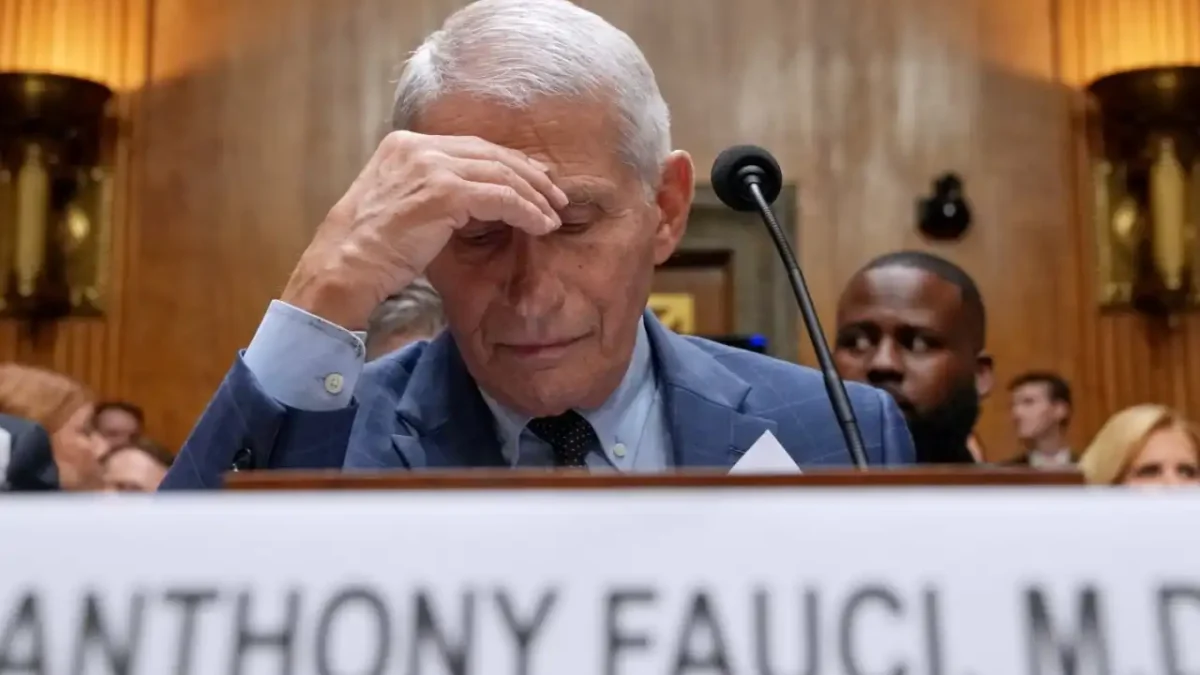
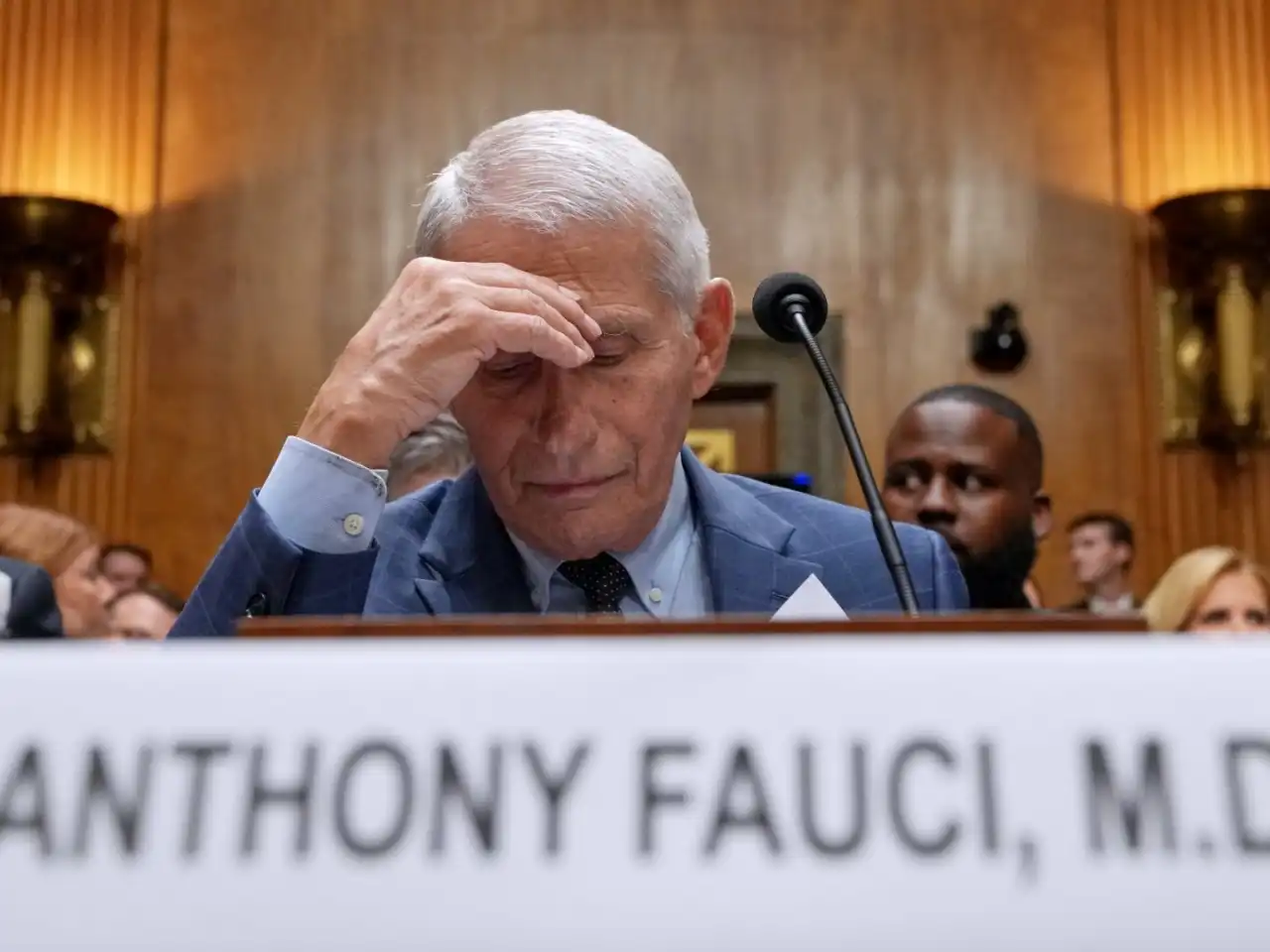
Senate Democrats just ran a wall around the most important COVID-19 witness yet to surface.
They voted to protect a woman who allegedly spent two decades destroying Anthony Fauci’s records rather than let her tell what she knows.
And what US Senator Rand Paul (R-KY) said about that vote deserves the attention of every American who spent the last five years wondering whether the government lied to them about where the virus came from.
What the Democrats Just Buried
Paul, who chairs the Senate Homeland Security and Governmental Affairs Committee, brought a resolution to a vote that would have granted immunity to a longtime special assistant to Anthony Fauci — immunity from potential criminal charges, in exchange for her full testimony about the alleged destruction of federal records on Fauci’s behalf.
The resolution needed a two-thirds majority to pass. Democrats voted it down 8-7. Every Republican on the committee voted yes.
The witness, whom Paul declined to name publicly, had already appeared before the committee in a private session. She invoked the Fifth Amendment in response to a subpoena and refused to answer questions. That Fifth Amendment invocation is itself notable: the Constitution protects Americans from self-incrimination, and you cannot incriminate yourself without having done something potentially criminal.
Paul described the witness as someone who worked as Fauci’s aide from 2007 all the way until Fauci departed the National Institute of Allergy and Infectious Diseases in 2022. She was, in his words, an aide “in the flow of communications” during the frantic early weeks of the pandemic — the period when Fauci worked alongside then-Wellcome Trust Director Jeremy Farrar to produce an influential scientific paper that dismissed the possibility that COVID-19 leaked from a laboratory.
Records later obtained through Freedom of Information Act requests and congressional subpoenas revealed that the very scientists who wrote that paper privately expressed serious doubts about their own conclusions and speculated among themselves about a possible lab origin. The paper that went public said something quite different from what its authors were privately saying to each other.
Paul also indicated the special assistant may have destroyed public records for Fauci across two decades — not just during the pandemic, but stretching back through his entire tenure running NIAID.
The Paper Trail That Already Exists
Publicly available records identify Patricia Conrad as a special assistant who worked in Fauci’s office from 2007 to 2022, and she appears looped into numerous communications from the critical late January through early February 2020 window. Fauci reportedly referred to Conrad as his “right-hand woman.” She shows up in the email records the committee has already released, as well as in Fauci’s private notes.
Paul did not publicly confirm that Conrad is the witness whose immunity the committee considered. But the picture building around her is difficult to ignore.
A separate email obtained in an earlier House investigation pointed to a National Institutes of Health employee named Marge Moore — described as someone who “hated FOIA” and oversaw Freedom of Information Act requests — who allegedly helped Fauci’s aide David Morens “make emails disappear.”
And Morens is not a hypothetical cautionary tale. He pleaded guilty last month to conspiracy to commit offenses and to defraud the United States, charges directly tied to federal records destruction. A man who sat near the top of Fauci’s operation has already admitted in a court of law that he conspired to hide records from the public. The question Paul was trying to answer is how far that culture of concealment actually extended — and who gave the orders.
“I think everybody should be for transparency, whether a Republican or a Democrat,” Paul told The Daily Signal. “We’d like his assistant to testify about who gave her the orders to destroy records, how many records were destroyed, and over what period of time she destroyed records for Anthony Fauci.”
That is not a fringe concern. That is a sitting committee chairman asking a basic accountability question about federal law and the public’s right to know what its own government did during a once-in-a-generation health crisis.
What Democrats Chose Instead
Paul’s reaction to the vote cut straight through the procedural fog.
“Let me be clear about what just happened here. A majority of the committee voted to seek the truth. All Republicans voted to seek the truth,” he said.
He did not stop there. “Evidently there’s more important things to do in the United States Senate than to find out who destroyed public records,” Paul added. “I guess when you get paid to be a United States senator it’s optional to show up for committee hearings.”
That last line is worth sitting with. Reports indicated only one Democrat even showed up for the vote. Democrats cast seven votes against the resolution despite a quorum problem that apparently required minimal physical presence to kill the effort. They sent a message — not about process, not about immunity law technicalities, but about whose interests they protect when the heat gets close to Fauci’s operation.
Paul made clear the vote does not end the investigation. He announced he would personally send a letter to the Department of Justice asking the DOJ to pursue the matter — specifically the former employee’s conduct and the underlying allegations involving the destruction of records. The committee will keep examining the trail even without the witness the Democrats just chose to shield.
But accountability delayed is accountability denied, and the Democrats understand that perfectly well. The immunity route offered the cleanest path to compelled testimony under oath. The DOJ referral route is longer, messier, and more easily slow-walked. That is probably the point.
The Pattern Behind the Vote
Americans who paid attention during the pandemic watched Fauci testify before a House committee in 2024 that he never deleted federal records or sought to obstruct the release of public documents. That sworn testimony now sits next to a growing file of emails, congressional subpoena returns, and at least one guilty plea from a close associate that points in the opposite direction.
The Proximal Origin paper — the influential scientific document Fauci and Farrar helped shepherd into existence in early 2020 — declared a lab origin of COVID-19 unlikely. Privately, some of the scientists involved expressed very different views. The public got one story. The internal communications told another. And the records that might have clarified the full picture were, according to the allegations at the heart of this investigation, systematically destroyed.
Paul has spent years pursuing this question through subpoenas, FOIA requests, and contentious hearings. His committee’s Reading Room, launched earlier this year, releases primary-source documents, internal correspondence, and transcribed interviews on a rolling basis. The body of evidence has grown large enough that a senior Fauci aide already pleaded guilty to federal crimes connected to record concealment.
And yet when Paul brought a straightforward resolution to immunize a witness in exchange for her testimony — testimony that could answer who authorized the destruction of records and for how long that destruction ran — every Democrat on the committee voted no. Not one broke ranks. Not one decided that the public’s interest in knowing what happened during COVID-19 outweighed whatever calculation sent them into opposition.
The families of the nearly one million Americans who died during the pandemic deserve better than a committee vote designed to protect the people who controlled the information. The DOJ referral is now the path forward. Whether the Justice Department moves swiftly on it or buries it alongside every other inconvenient thread in this story remains to be seen.
What is already clear is that Senate Democrats looked at a witness who allegedly spent twenty years destroying Anthony Fauci’s federal records, invoked the Fifth Amendment rather than answer questions under subpoena, and decided that the safest play was to make sure she never has to say a word under immunity either.
That decision tells you something. The question is whether the DOJ referral — and the continued release of documents through the committee’s Reading Room — will eventually force an accounting that the Democratic minority just voted to prevent.
Sources: The Daily Caller, Washington Examiner, Washington Times, The National Desk, RedState
Stay connected